
If you live in Bath and you’re fed up with weak showers, running out of hot water halfway through the family bath rota or waiting ages for the tank to reheat, you’ve probably heard about system boilers and unvented hot water cylinders. They’re becoming more common in newer properties and increasingly popular in older homes that are being modernised.
We get asked about them most weeks. Usually it starts with, “Do I need one of these unvented things to get better pressure?” The honest answer is: sometimes, yes. But they’re not right for every property. Here’s a straightforward guide to help you understand what they are, how they work and whether an upgrade makes sense for your home.
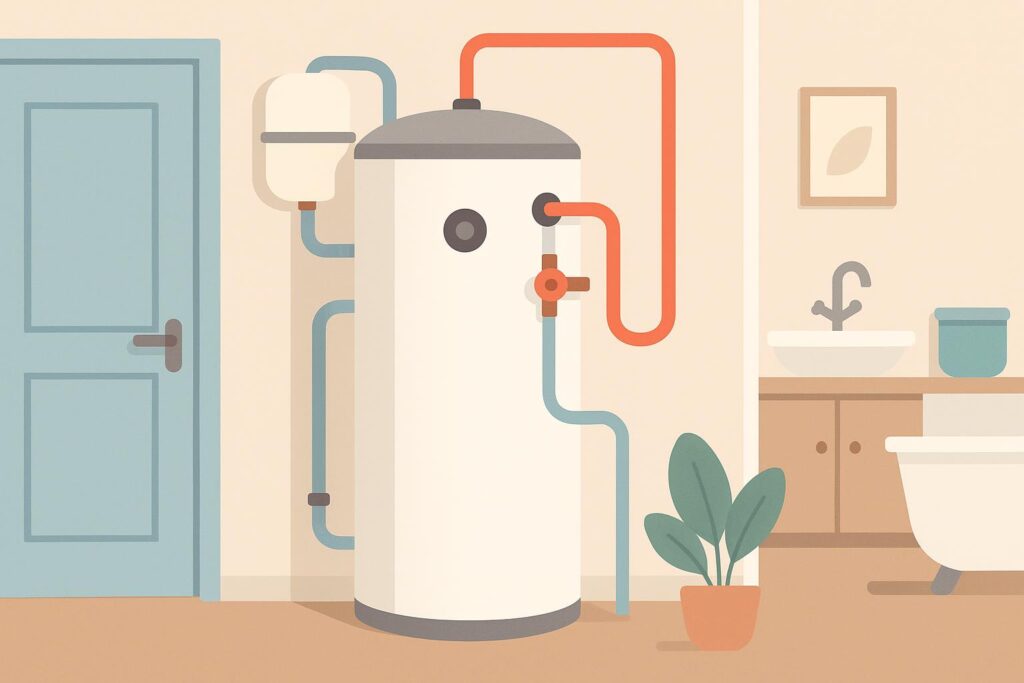
What Is an Unvented Hot Water Cylinder?
In simple terms, an unvented hot water cylinder is a sealed system that stores and heats your hot water at mains pressure. Unlike the older vented systems, which rely on a cold water tank in the loft, unvented cylinders are fed directly from the mains.
That means no cold water storage tank upstairs and no gravity-fed pressure limitations. The hot water that comes out of your taps and showers is delivered at a much stronger, more consistent pressure, assuming your incoming mains supply is up to standard.
How they differ from traditional systems
A traditional vented system usually has:
- A cold water tank in the loft
- A hot water cylinder in the airing cupboard
- Lower pressure, especially upstairs
With unvented hot water cylinders in Bath homes, we remove the loft tank completely. The cylinder is sealed and fitted with safety devices to manage expansion and pressure. It’s a more compact and often neater solution, particularly if you’re converting the loft or reclaiming storage space.
The Benefits of Going Unvented
This is where most homeowners lean in a bit. The performance difference can be noticeable, especially in family homes.
Stronger, more consistent pressure
If your mains pressure is good, you’ll get much more powerful showers and better flow from taps. We’ve had customers in older Bath terraces who thought they needed a pump, only to find that an unvented system solved the problem properly.
No loft tank
Getting rid of the cold water tank frees up space and removes the risk of loft tank issues like slow refilling, ball valve problems or the occasional winter freeze. It also means fewer components to maintain.
Good for multiple bathrooms
If you’re adding an en suite or have a busy household, an unvented cylinder can cope better with several outlets running at once, as long as the incoming mains flow rate is sufficient. It’s a common upgrade during extensions and renovations.
Clean, stored water
Because the system is sealed, the stored hot water isn’t sitting in an open tank. It’s supplied directly from the mains, which gives peace of mind from a hygiene point of view.
What Are the Requirements?
This is the part that often gets overlooked. Not every home is automatically suitable for unvented cylinder installation.
Adequate mains pressure and flow
Before we recommend anything, we test the incoming mains. It’s not just about pressure in bar, it’s about flow rate in litres per minute. We’ve tested plenty of properties where the pressure reading looked healthy but the flow was restricted by older pipework.
If the mains supply isn’t strong enough, an unvented system may not deliver the benefits you’re expecting.
Qualified installation
Unvented systems must be installed by an engineer with the correct G3 qualification. They include specific safety components such as pressure relief valves and expansion vessels. These aren’t optional extras. They’re critical for safe operation.
If you’re comparing quotes for unvented cylinder installation, always check the installer is properly certified. It’s not an area to cut corners.
Servicing
Unvented cylinders should be serviced annually. During a service we check the expansion vessel charge, safety valves and overall condition. It’s a straightforward visit but important for keeping the system running safely and efficiently.
What Does It Cost?
Costs vary depending on the size of cylinder, the required upgrades to pipework and whether you’re replacing an existing system or starting from scratch.
As a rough guide, a straightforward swap where pipework is in good condition will cost less than a full system reconfiguration. If we need to upgrade incoming mains pipework or relocate the cylinder, that adds to the overall figure.
The best way to get a clear answer is with a proper survey. That allows us to check your pressure and flow, look at space and talk through how much hot water your household actually uses. There’s no point fitting a cylinder that’s too small and constantly running out, or too big and wasting energy.
Common Questions from Homeowners
Will I need a new boiler as well?
Not always. Many modern boilers are compatible with unvented cylinders. If your boiler is ageing or undersized, we’ll tell you honestly whether it makes sense to upgrade at the same time.
Is it safe?
Yes, when installed and serviced correctly. Modern unvented hot water cylinders in Bath homes are fitted with multiple safety devices. Problems tend to arise only when systems haven’t been maintained or were installed incorrectly years ago.
Will it fix low pressure everywhere?
It improves hot water performance but it won’t magically fix a poor incoming mains supply. That’s why testing is so important before committing to an upgrade.
How long does installation take?
Most standard installs take one to two days, depending on complexity. We’ll always let you know in advance and keep disruption to a minimum. In older Bath properties with tight airing cupboards, sometimes a bit of creative pipework routing is needed, but nothing out of the ordinary.
Is It the Right Upgrade for You?
If you’re renovating, adding a bathroom or simply frustrated with your current hot water performance, an unvented system is well worth considering. It’s not about chasing trends. It’s about matching the system to the way your household actually lives.
At Complete Gas Heating, we carry out unvented cylinder installation work across Bath as well as and We take the time to assess each property properly rather than giving blanket recommendations. Some homes genuinely benefit from unvented hot water cylinders. Others are better off improving what they already have.
If you’d like clear, practical advice from engineers who know the local housing stock and the quirks that come with it, speak to Complete Gas Heating. We’ll test your supply, look at your setup and give you straight answers. The first step is simple: Book an unvented cylinder survey