




Interested in our services?
Our experienced and helpful staff are always happy to help.
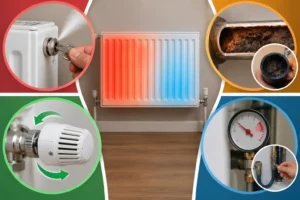

As you can imagine, you’ve got access to various brands of gas boilers. Each has their pros and cons, but the one you choose should be the best for your budget and your household’s needs.
At Complete Gas Heating Services Ltd, we will always recommend to our customers leading brands like Worcester Bosch.
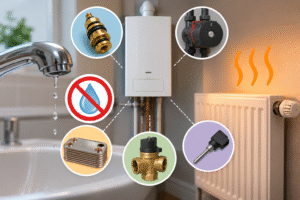
Your boiler has all sorts of in-built safety features that stop you from coming to harm if something were to go wrong. This is clearly a very beneficial thing, but it can be frustrating when your boiler is turning itself off all the time and you are not sure why it’s happening. In truth, if this is happening then you need to make sure that you fix it as soon as possible, with the help of professionals of course, and ideally avoid using it until that has happened.
But what exactly is the likely cause of a boiler turning itself off regularly? There are a few possible reasons this might happen. It could be that your boiler’s temperature control valve has run into difficulty, meaning that it won’t be able to keep the temperature under control, and that is obviously a dangerous situation for a boiler to be in. To avoid harm, the boiler will turn itself off in this scenario.
But it will also do that if the water pressure gets too low, which can happen naturally over time if your boiler has been in place a long time, or if you have recently bled your radiators. As such, how to fix it depends on what kind of situation it is actually going to be.
In any case, make sure that you contact our team for a boiler repair if this is happening to your boiler. We are the number one service in Longwell Green for boiler repair.
Once your boiler has been serviced, it’s essential to follow the instructions of the technician. They will provide you with a list of things to do in order to keep your boiler running smoothly. Be sure to follow their instructions carefully in order to avoid any problems.
In conclusion, giving your boiler a spring clean is an essential part of homeownership. By following these simple tips, you can ensure that your boiler will continue to provide heat and hot water all season long!
Most newer boiler models usually have a sticker on the boiler that indicates its efficiency rating. However, this is unlikely for older boiler models. Nonetheless, you can still work your way around determining how efficient it is.
You can start by identifying the boiler number and brand for older boilers. Once you have that information, you can enter your findings into the Product Characteristics Database (PCDB), which has data on almost every type of boiler. After finding the boiler model, look out for its seasonal efficiency rating, which gives near-accurate data on how your boiler performs annually.
A boiler service will clean and adjust your boiler, ensuring that it’s running as efficiently as possible. This can save you money on your energy bills in the long run, as you’ll be using less energy to heat your home.
It’s also essential to have your boiler serviced each year, as this will help to extend its life expectancy. If you don’t service your boiler, it could break down, costing you even more money in repairs.
Boiler breakdowns are among the most common reasons for home fires, so it’s crucial to ensure that your boiler is in good condition. Boiler installation and servicing is a job for the experts, so be sure to call in a qualified heating engineer to carry out the work.
If you’re looking for ways to reduce your monthly energy costs, consider having your boiler serviced. A boiler service will clean and adjust your boiler, ensuring that it’s running as efficiently as possible. This can save you money on your energy bills in the long run, as you’ll be using less energy to heat your home.
It’s also essential to have your boiler serviced each year, as this will help to extend its life expectancy. If you don’t service your boiler, it could break down, costing you even more money in repairs.
When was the last time you replaced your boiler? Most people don’t replace it when they are living in their house, and they don’t even replace it when the boiler shows signs that it’s effectively dying. Before you can decide whether it’s a good idea to replace your gas boiler, you need to know if the one that you currently have is sufficient enough for your needs. How much gas are you using per year? How much are you spending on your current heating bills? These are important things to remember, and you should check your past 12 months of bills to see how much you’re spending.
If you have been dealing with rattling boiler issues or a weird smell from your boiler, then it might be worth checking with a Gas Safe Registered engineer if your boiler is working properly. No matter what, though, the process of replacing the boiler needs to be considered because it can be a rather big job! If you speak to a qualified engineer, you can ascertain whether your gas boiler is being replaced with another gas model, or if you choose an electric one.
There are some standards that need to be upheld when it comes to your boiler. If yours keeps breaking down, then replacing it may be the cost-effective option. Replacement of your boiler can be necessary if it’s overworking the one you have. Speaking to an expert can help you to decide whether you upgrade your boiler and to which model.
The vast majority of UK homes are currently heated by gas boilers, but there’s an ongoing push to replace these boilers with heat pumps, across many sectors of society.
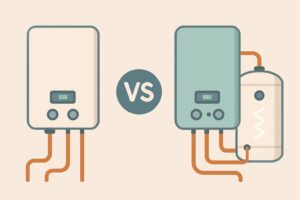
A boiler and a heat pump both achieve the same thing in different ways. But which one of these options is likely to be the most suitable for you?
Let’s take a look.
There is a vast infrastructure in place supporting gas boilers, with huge numbers of qualified heating engineers available to carry out boiler service and boiler repair work.
Boilers offer consistent heating in different weather conditions, and their performance isn’t impacted by what’s going on outside.
It’s unlikely you’ll need new radiators or pipes fitted for a new gas boiler, but it’s likely with a heat pump installation.
Boilers are less environmentally friendly than heat pumps and have lower energy efficiency when heat pumps are working in ideal conditions.
Based on government carbon targets, gas prices may be prone to rise.
Heat pumps are a renewable and environmentally friendly source of heating and offer great energy efficiency when operating under ideal conditions. Heat pumps have a COP score of up to 3, so each unit of energy put into the heat pump yields three units of energy as heat.
Heat pump installation falls under the government’s Boiler Upgrade Scheme, so you can have your installation subsidised at up to £5,000.
Heat pumps work almost like a reverse refrigerator, by drawing in and condensing heat from outside. They are therefore more efficient on hot days, and less efficient on cold nights. The opposite of what most people want.
Ideal heat pump performance relies a lot on modern home builds and good insulation. Many UK homes don’t meet this profile.
Heat pumps are fairly cumbersome and need a unit installed outside the home. This could be an eyesore, and might be noisy, too.
There are few heat pump specialists to conduct repairs.
During the cold winter months, central heating can account for a massive proportion of your energy costs – as much as 60%.
We all want to save money, especially given the difficult times at the moment. It can seem like an impossible chore, but by adopting energy-saving measures like insulation and draught-proofing your doors and windows, you may be able to significantly lower your energy expenditures. Investing in a new gas boiler is also a smart way to save money on gas and energy.
Many of us are still using boilers with old technology – if your boiler is more than ten years old, this is certainly the case. While it might seem like it is working ok, it is potentially costing you lots of money in gas use and potential boiler repairs, it is definitely not as efficient as it could be. Boilers have improved massively in recent times and replacing your old one with an energy-efficient, A-rated eco-friendly condensing boiler and making sure you keep up with yearly boiler servicing can save you as much as £300 a year.
It all comes down to how the boiler gets rid of waste gases. Depending on your system, gas or oil is burned and used to heat the water in your central heating system when you use a boiler. As a result of this process, waste gases are produced. These waste gases must be removed from the property for safety reasons.
As a result, the boiler relies on a flue to expel waste gases from the building. Unfortunately, when waste gases exit through the flue in outdated boilers, a lot of usable and valuable heat energy is lost along with them.
Thanks to a secondary or extended heat exchanger, condensing boilers may recover a lot of the critical heat energy that would otherwise be squandered in the atmosphere. This has a considerable impact on the efficiency of the boiler and the overall operation of your central heating system – and save you money.
A radiator that’s cold at the bottom is definitely not something you want to deal with. You need your radiators to work well to heat your home efficiently. If your heating system isn’t working as it should, you need to fix it ASAP. You need a warm home, and you don’t want to waste money on your heating. A cold radiator isn’t too hard to address if you can work out the cause.
If you have ever wondered why your heating bills are getting more expensive each year. Or, for those who question why their home takes so long to heat up, you might have debris in your central heating system.
To get rid of debris and a build-up of sludge in your system, power flushing can clean up your system for greater efficiency. There are so many benefits from cost savings to a warm home. On that note, here are the benefits that you will want to know about power flushing.
Boilers are like many important things in life; we do tend to take them for granted. Until, of course, they stop working and we realise what we’ve lost. When your boiler is no longer as efficient as it once was or has given up entirely, replacing it might be your best option, especially as today’s boilers are so well made with up-to-date technology. Choosing the right boiler for your home comes with various questions; here are some of them.
The capacity of the boiler you need will depend on the home you’re installing it in. The larger the house, the larger the boiler needs to be, and the more people who live there, the larger still. So a one-bedroom flat with one person in it will require a much smaller capacity boiler than a six-bedroomed house with 12 people there. Calculating the capacity of your boiler correctly means you’ll always have heating and hot water when you need it.
For more advice and guidance on just how to find the best boiler for your home, contact us today. We have experience in precisely this field.
Boilers will not last forever, and all need replacing eventually. If your boiler is becoming less efficient, then that might be a sign you need to replace your boiler. If you notice that your bills keep creeping up, this could be a sign and it is time to start looking for a replacement. Older boilers are less efficient and, therefore, more costly to run. It’s worth weighing up what you spend on your yearly bills against the cost of a new boiler.
Older boilers may also need to be repaired a lot. Running repairs can become costly, especially if older parts are becoming harder to find. If your boiler is frequently breaking down, ask a specialist to test your boiler, diagnose any problems, and to advise if the cost of ongoing repairs may outweigh the cost of a new boiler. If you are ever unsure of your boiler’s safety or efficiency, it is always important to speak to a specialist and not attempt any repairs yourself.
If your boiler is just not working like it used to, then it might take longer for your house to warm up, or you might frequently have to adjust your boiler’s pressure. These may seem like minor niggles, but it is worth getting this checked out before the boiler breaks down entirely, leaving you in a cold house before a new one can be installed. Specialists can diagnose your boiler’s performance and recommend new installations to match your home and lifestyle needs.
Designed to deliver optimal power with minimal fuel usage, the Worcester Bosch Greenstar Lifestyle 8000 is a leading boiler for residential properties. Available as a gas combi boiler or as an LPG model, its versatility ensures it’s a great choice for a wide variety of homes.
Given an A ErP rating for both heating and hot water, the lifestyle 8000 is a highly energy-efficient boiler that can reduce your household’s carbon footprint and even minimise your utility bills.
However, don’t let its energy efficiency fool you. It’s a powerful boiler that’s capable of providing sufficient heating and hot water to larger properties. If you have two or more bathrooms, for example, you’ll need a boiler that can cope with the increased demand and the Style 8000 can do just that.
With an optional Intelligent Filling System, it’s easier than ever to ensure you always have access to hot water and heating, no matter how many appliances, showers or sinks are running at the same time.
Additionally, wireless connectivity and compatibility with the Bosch EasyControl smart thermostat means that operating the Lifestyle 8000 is simple and straightforward. If you’re looking for a gas combi boiler that can be integrated into a smart home, this boiler fits the bill.
For homeowners, reliability and functionality are key when it comes to boilers and the 12-year guarantee that comes with the Lifestyle8000 will certainly give you peace of mind.
Cold is always an unwelcome house guest, especially when it sneaks up seemingly out of the blue. You know how it goes – one moment you’re enjoying a well-heated space, and the next you’re piling on extra layers.
Aside from being an inconvenience, progressively losing heat is a sure sign that something’s not right. Aside from costing you more in heating, this could be the prelude to a much bigger problem if you don’t take action.
That’s why, if your rooms don’t stay warm for as long as they used to, you should ask yourself the following questions.
Lastly, look at your boiler. Wear, tear, and faulty parts can all lead to poor heating efficiency. Equally, a boiler that doesn’t fit your current needs could altogether fail to supply the heat you require.
In either instance, expert engineers are the best people to find a solution, offering the repairs and maintenance that you need to get things back up to heat at last.
This method works well for pipes behind walls or in places that are hard to reach. By increasing the heat in your home, you increase the chances of melting an ice blockade. Do not begin the thawing process without shutting off the main water supply point, to prevent water from gushing out when thawing begins.
The winter season indeed comes with a lot of challenges for household pipelines. However, with these handy tips, you can prevent other damages from occurring.

Only use a GAS SAFE REGISTERED ENGINEER to FIT, FIX and SERVICE your gas appliances. Click here for more info.
